National Dialogue on Sustainability of Urban Primary Health Care
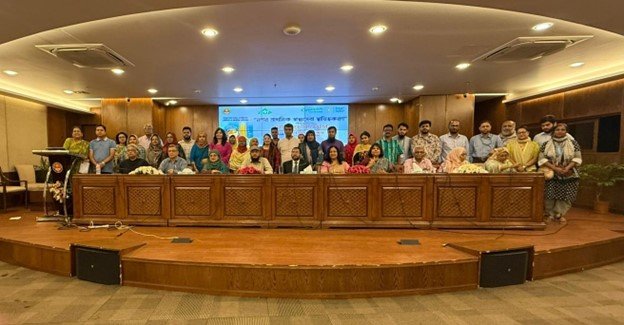
The National Dialogue on Sustainability of Urban Primary Health Care was held on 21 May 2025 at Dhaka North City Corporation (DNCC), jointly organized by Coalition for the Urban Poor (CUP) and DNCC, with support from Concern Worldwide. The event aimed to share a draft policy brief on sustaining urban primary health care and gather input from stakeholders. A total of 130 participants, including representatives from ministries, public health experts, NGOs, researchers, and media, attended.
The event was chaired by Abu Sayed Md. Kamruzzaman, NDC, Additional Secretary and CEO of Dhaka North City Corporation (DNCC). The Special Guests included Professor Tofail Ahmed, local government expert and former Chairman of the Local Government Reform Commission; Muhammed Kabir Uddin, Joint Secretary, Ministry of Local Government, Rural Development and Co-operatives (LGRD & C); Dr. Syed Kamrul Islam, Director of Primary Health Care at the Directorate General of Health Services under the Ministry of Health and Family Welfare; and Dr. Mary Rashid Programme Coordinator, Implementation & Impact from Concern Worldwide. Dr. Asif Mohammad Shahan, Professor at the Department of Development Studies, University of Dhaka, delivered the keynote presentation. The panel of discussants featured Dr. Mushtaq Hossain, public health expert and Adviser at IEDCR; Dr. Sohana Shafique, Researcher and Project Coordinator for Urban Health at ICDDR,B; and Dr. Sharmin Nahar, Senior Monitoring and Evaluation Manager at UPHCSDP II. Due to unavoidable circumstances, the Chief Guest, Mohammad Azaz, Honorable Administrator of DNCC was unable to attend in person. However, he remained connected to the event via phone and received follow-up on the proceedings.
Khondker Rekeba Sun Yat, Executive Director of CUP, moderated the event and welcomed all guests, inviting them to take their seats.
Shahina Akhter Doly, Vice Chairperson CUP & ED, Nari Maitree, delivered the welcome speech, emphasized the government's responsibility in healthcare, highlighted CUP's long-standing collaboration with Concern Worldwide, and urged sustainable solutions to continue essential urban health services—including preventive, promotive, minor curative, and mental health care—for marginalized communities beyond UPHCSDP II.
Dr. Asif Mohammad Shahan, Professor at the University of Dhaka, presented a paper titled "Sustainability of Urban Primary Healthcare Service Delivery in Bangladesh: Key Challenges and Way Forward." He highlighted the severe impact of rapid urbanization and poor city planning in Bangladesh, particularly on slum dwellers who face inadequate healthcare and high out-of-pocket expenses, with around 20% of health costs borne directly by patients. He expressed concern over the vulnerability of the urban poor, who often cannot afford treatment. Introduced in 1998, the Urban Primary Health Care Service Delivery Project (UPHCSDP) has gone through multiple phases, aiming to provide equitable healthcare access. However, as the project nears its end, challenges such as budget limitations, weak monitoring and accountability, poor coordination between the Local Government Division (LGD) and the Ministry of Health, and a lack of ownership threaten its sustainability. To address these concerns, Dr. Shahan outlined six key priorities: identifying an appropriate service delivery model, ensuring adequate healthcare infrastructure, addressing human resource gaps, securing consistent funding, establishing robust accountability and monitoring systems, and developing a comprehensive and supportive policy framework.
Dr. Mushtaq Hossain, public health expert and Adviser at IEDCR, stressed the urgency of health sector reform in Bangladesh following the July 2024 uprising, warning of potential unrest if changes are not made. He emphasized that healthcare is a fundamental right and must be ensured by the government, particularly for the urban poor, as lack of access deprives them of the strength even to seek legal recourse.
Dr. Sohana Shafique, Researcher and Project Coordinator for Urban Health at ICDDRB, highlighted the heavy burden on Bangladesh’s health services, pointing to gaps in infrastructure and skilled personnel identified through recent mapping. She emphasized the need for resource optimization, independent monitoring, improved coordination, data protection, policy updates, and better use of community health workers.
Dr. Sharmin Nahar, Senior Monitoring & Evaluation Manager at UPHCSDP II, reported that the project has served approximately 52.5 million urban residents. She noted ongoing challenges with referral linkages at secondary and tertiary levels and emphasized that the current online reporting system fails to capture the individual contributions of healthcare professionals.
Professor Tofail Ahmed, a local government expert and former Chairman of the Local Government Reform Commission, criticized Bangladesh's healthcare system as ineffective and business-oriented, highlighting its failure to deliver services despite having staff and equipment. He called for clear policies, dedicated budgets, better accountability, and cooperation between city corporations and local governments to ensure sustainable urban healthcare.
Dr. Mary Rashid, Programme Coordinator, Implementation & Impact, Concern Worldwide Bangladesh, emphasized the urgent need to prioritize healthcare for urban and marginalized populations, highlighting that while services exist, awareness remains low. She called for a sustainable, long-term solution rather than temporary project-based initiatives, leveraging past lessons and existing frameworks to build a stronger system.
Muhammed Kabir Uddin, Joint Secretary, Ministry of Local Government, LGRD & C, highlighted Thailand's healthcare system as a model for Bangladesh, emphasizing efficient resource use, health insurance schemes, and structured budget frameworks. He advised organizers to submit a detailed policy module for government consideration and noted that the ADB-supported urban healthcare project will be extended for seven years with a focus on sustainability.
Dr. Syed Kamrul Islam, Director, Primary Health Care, Directorate of General Health under the Ministry of Health and Family Welfare, emphasized the need for immediate planning to address urban healthcare challenges, highlighting key barriers such as poor coordination between the Ministry of Health and LGD, weak referral systems, and the lack of affordable medicines and diagnostic centers. He proposed that implementing an effective GP and referral system would alleviate pressure on urban health facilities and improve service delivery for Bangladesh's urban population.
Abu Sayed Md. Kamruzzaman, NDC, Additional Secretary, CEO of Dhaka North City Corporation, highlighted that 65% of DNCC posts remain vacant due to administrative hurdles, severely limiting urban healthcare delivery. He criticized reliance on foreign funding and unclear ministerial oversight, urging immediate cooperation between the LGD, Ministry of Health, and NGOs to establish sustainable domestic solutions and an organogram for long-term healthcare sustainability.
The opinions and recommendations from the National Dialogue highlight critical gaps and actionable steps for sustainable urban primary healthcare in Bangladesh. Hafezul Islam, CARE Bangladesh, pointed out the lack of public awareness and a dedicated framework for urban healthcare, unlike rural areas, urging immediate policy adjustments. Farzana Yasmin, Psychologist emphasized the neglect of mental health services, calling for the inclusion of psychologists in urban healthcare facilities. Moina Begum, representing grassroots communities, shared the dire consequences of discontinuing urban primary health centers, particularly for marginalized groups who rely on affordable services. Ms. Rehana, Project Manager, underscored the project’s success in serving vulnerable populations, including delivering 10 lakh babies in slums, and advocated for continued NGO involvement with donor-supported monitoring. Dr. Naila Parvin, Ahsania Mission, highlighted the potential of referral systems and innovative models like strategic purchasing, while noting logistical challenges within Dhaka. Broader recommendations included the creation of a national urban health policy to clarify roles and funding, as well as the introduction of health insurance or voucher schemes to reduce out-of-pocket expenses for the urban poor. These insights collectively stress the need for urgent, coordinated action to ensure equitable and sustainable healthcare access for all urban residents.
In conclusion, the event underscored the urgency of addressing urban healthcare gaps through coordinated, policy-driven solutions. By leveraging the momentum generated, stakeholders can translate recommendations into tangible reforms, ensuring equitable and sustainable healthcare access for Bangladesh’s urban poor. The dialogue not only reinforced partnerships but also laid a roadmap for systemic change, emphasizing the need for immediate and collaborative action to secure the future of urban primary healthcare.