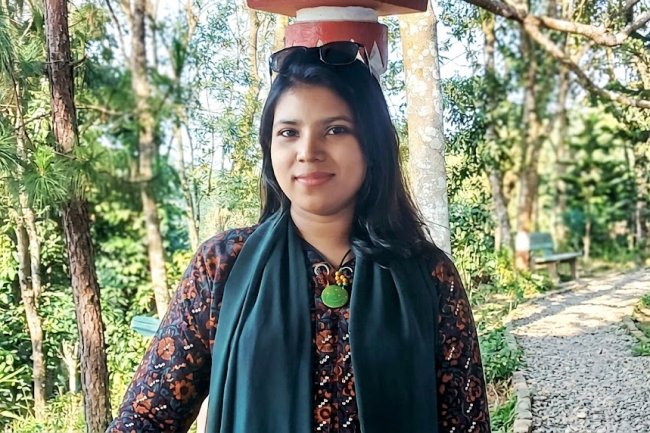
Key Stakeholder Message: Dr. Humayra Alam Mou

Dr. Humayra Alam Mou
Assistant Director
Health & Human Science Department
Eminence Associates for Social Development
Each day, thousands of people stream into Dhaka and other Bangladeshi cities, drawn by the promise of steady work, quality schooling, reliable healthcare, and a chance to rise. Yet the cities that receive them are buckling under the weight of their own expansion. Housing is scarce, roads are congested, sanitation is overstretched, and food systems and health services struggle to keep pace. Urban growth offers genuine opportunity, but it also poses a fundamental question: can every resident be properly nourished and live in good health? For too many, the honest answer is no. As living costs climb, low-income families find a balanced diet increasingly unattainable. They turn to cheap, calorie-dense staples, and protein, vitamins, and minerals quietly disappear from the plate. Affluent households, by contrast, enjoy abundant fresh produce, well-stocked supermarkets, and quality medical care. Poorer families contend with food insecurity, monotonous diets, cramped dwellings, and hazardous surroundings. One city, two starkly different tables. Eating habits are shifting as well. Fast food, ultra-processed snacks, sugary beverages, and meals laden with salt and fat have become ubiquitous. Gruelling workdays, gridlocked traffic, and exhausting commutes push people to skip meals, eat on the street, or dine at erratic hours. With less opportunity for movement and polluted air to breathe, it is hardly surprising that obesity, diabetes, hypertension, heart disease, and certain cancers are on the rise.
The result is a double burden of malnutrition, where undernutrition and overnutrition coexist within the same neighbourhoods and, at times, the same household. A child may lack dietary variety and essential micronutrients, while an adult beside them battles excess weight. Young people deserve particular attention. With few safe playgrounds or parks, children have little room to run and play. Relentless advertising for unhealthy food and long hours of screen time quietly shape what they eat and how they live. Schools can play a decisive role by nurturing nutrition literacy, encouraging discerning choices, and instilling habits that endure into adulthood. Cities undeniably offer much: hospitals, diagnostic centres, specialist care, supermarkets, and a wide variety of food. But these advantages remain unevenly distributed, and often unaffordable. Quality healthcare and nutritious food must be within reach of everyone, regardless of income or social standing. No single institution can resolve this alone. Planners, clinicians, educators, and policymakers must collaborate on affordable healthy food, nutrition education, school-based programmes, robust primary care, and neighbourhoods that make walking, cycling, and play safe and inviting.
Ultimately, a healthy city is not judged by its hospitals, restaurants, or gleaming infrastructure, but by whether every resident can obtain nutritious food, remain physically active, and live in a safe, supportive environment. Unless urban development advances alongside nutrition and health, the rewards of urbanization will remain beyond the reach of many.