Aalo Clinics (Urban Primary Healthcare Clinics) and its Domiciliary Services: Bridging the Gap in Urban Healthcare Access in Bangladesh
Bangladesh is undergoing rapid urbanization, with approximately 40.5% of its population now residing in urban areas. However, this unplanned urban expansion has severely strained primary healthcare (PHC) services, leaving many residents—particularly those in low-income and slum communities—with inadequate access to quality healthcare. Urban Local Bodies (ULBs), which are legally responsible for providing PHC services, lack the necessary infrastructure and human resources to meet demand. Meanwhile, the Ministry of Health and Family Welfare (MoH&FW) offers only limited PHC through Government Outdoor Dispensaries (GODs) and hospital outpatient departments (OPDs). As a result, many urban dwellers turn to informal healthcare providers, exacerbating health disparities and leaving vulnerable populations without proper medical attention.
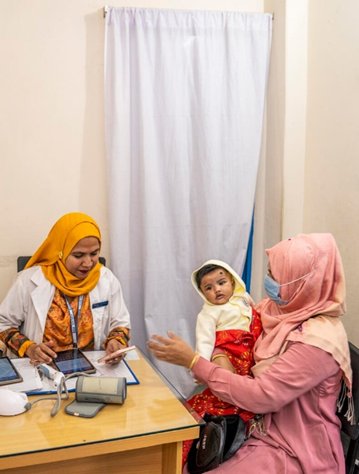
To address these systemic gaps, UNICEF, with support from the Embassy of Sweden, developed the Aalo Clinic model—a comprehensive, digitalized, and free urban PHC initiative designed to serve marginalized communities. Launched in December 2021, six Aalo Clinics now operate across four city corporations, delivering essential healthcare services while reducing the burden on overstretched tertiary hospitals. These clinics provide a wide range of services, including maternal and child health support, immunizations, non-communicable disease (NCD) screenings, diagnostic tests, and referrals for complex medical cases. Located in densely populated and underserved areas such as Korail, Mirpur, Shyampur, Dhalpur, Gazipur, and Narayanganj, the clinics serve as a critical healthcare lifeline for low-income urban residents.
Each Aalo Clinic is designed for efficiency and accessibility, handling an average of 168 consultations per day, with 84 patients seen per shift. It also provides 470 point-of-care diagnostic services daily, along with 73 lab tests across two shifts. Immunization services reach 45-48 children weekly, while antenatal care (ANC) is provided to 12-13 pregnant women each day. Additionally, the clinics offer ultrasounds, ECGs, growth monitoring for children, and malnutrition screenings. A key feature of the Aalo model is its use of digital health records, which streamline patient management and enable data-driven healthcare improvements.
Recognizing the urgent need to reduce maternal and neonatal mortality, UNICEF expanded the Aalo initiative by establishing three 24/7 Midwifery-Led Normal Vaginal Delivery (NVD) Centers in Dhalpur, Shyampur, and Ershadnagar. These centers provide safe, free delivery services for vulnerable women, along with comprehensive antenatal, intrapartum, and postnatal care. A well-coordinated referral system ensures that high-risk pregnancies receive timely hospital intervention. Staffed by trained midwives and support personnel, these centers have already made a significant impact—since its inauguration in November 2024, the Dhalpur center alone facilitated 11 successful deliveries within its first month of operation.
To further extend healthcare access, UNICEF introduced Aalo Domiciliary Services, bringing preventive and promotive health interventions directly to households in the clinics’ catchment areas. This initiative focuses on early detection and management of health issues, including pregnancy tracking, child health monitoring, and screening for hypertension and diabetes among adults. By addressing minor health concerns at home, the program reduces overcrowding at clinics while ensuring continuity of care. Trained Community Health Nutrition Workers (CHNWs) conduct door-to-door visits, covering 20 households daily, and use digital tools for real-time data recording and monitoring. This community-based approach not only improves health outcomes but also fosters greater public awareness of disease prevention and healthy living.
The success of the Aalo Clinic model has garnered strong support from the Government of Bangladesh (GoB) and the MoH&FW, which now aims to replicate the initiative nationwide. High-level government officials, including the Hon’ble Advisor of MoH&FW, have visited Aalo Clinics and expressed enthusiasm for scaling the program to establish over 100 similar GP clinics in Dhaka alone. UNICEF is collaborating with the MoH&FW to draft a concept note for a nationwide General Practitioner (GP) Model based on the Aalo framework. Additionally, the program is transitioning from input-based funding to an output-based (strategic purchasing) model to ensure long-term sustainability and efficiency.
In conclusion, the Aalo Clinic model represents a transformative solution to urban healthcare challenges in Bangladesh, offering an integrated approach that combines digital innovation, community outreach, and specialized maternal care. By prioritizing accessibility, affordability, and quality, the initiative has already made significant strides in improving health outcomes for underserved populations. With strong government backing and plans for nationwide expansion, Aalo Clinics have the potential to play a pivotal role in achieving Universal Health Coverage (UHC) and advancing Bangladesh’s public health goals. This model not only aligns with the country’s 8th Five-Year Plan (8FYP) and UN Sustainable Development Goals (SDGs) but also serves as a replicable blueprint for other rapidly urbanizing nations facing similar healthcare deficits. Sustained investment and policy support will be essential to scaling this life-saving initiative and ensuring its long-term success.