BUHN Convenes National Roundtable on Disaster, Climate Change and Urban Health to Strengthen Urban Health Resilience
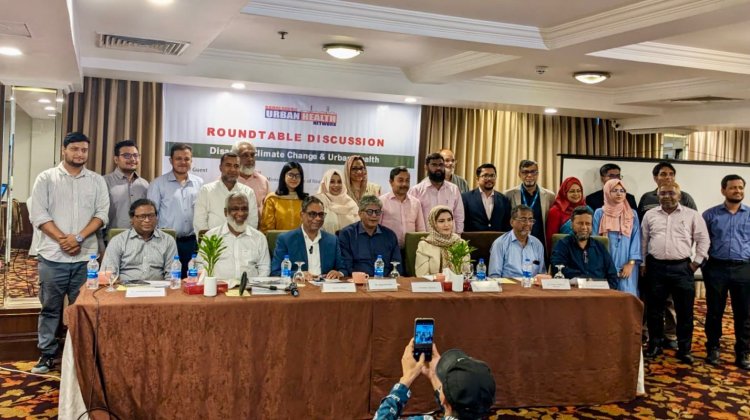
The Bangladesh Urban Health Network (BUHN), in partnership with UNICEF Bangladesh and with support from the Embassy of Sweden, organized a high-level Roundtable Discussion on "Disaster, Climate Change and Urban Health" on 15 June 2026 at Hotel Sarina, Dhaka. The event brought together senior government officials, policymakers, development partners, urban health experts, academics, engineers, researchers, and city corporation representatives to discuss strategies for strengthening disaster preparedness, climate resilience, and urban health systems in Bangladesh.
The roundtable served as a strategic platform to examine the growing health risks posed by climate change, rapid urbanization, and disasters, particularly earthquakes, and to identify policy and institutional reforms necessary to build resilient urban health systems. Participants emphasized the importance of integrating disaster risk reduction, climate adaptation, public health preparedness, and multi-sectoral collaboration into national and local urban development planning.
The session commenced with welcome remarks by Dr. Md. Shamim Hayder Talukder, Chief Executive Officer of Eminence Associates for Social Development and Member Secretary of the Bangladesh Urban Health Network. He highlighted the increasing vulnerability of Bangladesh's rapidly growing urban centres to climate-related hazards and disasters, stressing the urgent need for integrated urban health systems capable of protecting vulnerable populations during emergencies. He emphasized that strengthening collaboration among government agencies, development partners, academia, and civil society is essential for enhancing urban resilience and safeguarding public health.
The keynote presentation was delivered by Prof. Dr. Tahmid Malik Al-Hussaini, faculty member at the Bangladesh University of Engineering and Technology (BUET) and President of the Bangladesh Earthquake Society. Presenting evidence on Bangladesh's earthquake risk, he warned that a magnitude-8 earthquake could damage approximately 14 percent of Dhaka's buildings—around 45,000 structures—with devastating consequences for lives, infrastructure, and essential public services. He emphasized the close relationship between urban planning, disaster risk reduction, and public health resilience and called for comprehensive disaster preparedness training in schools, educational institutions, communities, and among architects, engineers, geologists, and construction professionals. He also highlighted the critical role of media and civil society organizations in promoting public awareness and preparedness before disasters occur.
Delivering the Chief Guest's address, Dr. M. A. Muhit, State Minister, Ministry of Health and Family Welfare, emphasized that Bangladesh's existing disaster management legislation requires urgent revision to clearly define the responsibilities of the health sector during emergencies. He cautioned that a major earthquake affecting Dhaka would extend far beyond the collapse of buildings, potentially disrupting hospitals, electricity, water supply, communications, and emergency response systems, thereby threatening the country's overall service delivery capacity.
Drawing lessons from previous disasters, Dr. Muhit called for stronger collaboration among legal experts, public health professionals, engineers, and disaster management specialists to update the country's disaster management framework. He also highlighted the need for integrated planning among the Ministries of Health, Disaster Management and Relief, Social Welfare, and other relevant agencies to strengthen preparedness, emergency response, and long-term recovery. Recognizing mental health as an often-overlooked component of disaster management, he emphasized the importance of integrating psychosocial support into disaster preparedness and response plans for both affected communities and emergency responders. He further advocated for establishing a professionally trained youth volunteer force capable of supporting emergency response during large-scale disasters and encouraged expanded investment in disaster research and training institutions.
During the discussion, Dr. Malalai Ahmadzai, Chief of Health, UNICEF Bangladesh, underscored the importance of ensuring that health systems remain operational during emergencies. She emphasized the need to prepare health workers for disaster response while strengthening community engagement, disease surveillance, timely information sharing, and emergency monitoring systems to ensure effective health service delivery during crises.
Contributing to the policy discussion, Mohiuddin Al Helal, Assignment Officer to the Prime Minister, recommended incorporating the provisions of the WHO International Health Regulations (2005) into Bangladesh's disaster management legislation. He also highlighted the absence of reimbursement mechanisms within the National Disaster Management Fund for private organizations providing emergency assistance and proposed developing a national registry of vulnerable populations based on poverty, disability, age, and other risk factors to improve emergency preparedness and response.
Representing local government, Md. Shafiqul Islam Khan, Administrator of Dhaka North City Corporation (DNCC), emphasized that disaster preparedness is a shared responsibility requiring active participation from government institutions, communities, and citizens alike. He announced plans to expand public awareness programmes across all 54 wards of DNCC to strengthen community-level disaster resilience.
The roundtable discussions also highlighted the increasing health impacts of climate change, including heat stress, urban environmental hazards, air pollution, waterborne diseases, displacement, and disruptions to healthcare services, all of which disproportionately affect the urban poor and other vulnerable populations. Participants stressed that climate adaptation and disaster risk reduction must be fully integrated into urban health planning to build resilient cities capable of responding effectively to future emergencies.
The event concluded with broad consensus on several strategic priorities, including reviewing and updating Bangladesh's disaster management legislation, integrating the WHO International Health Regulations into national policy, strengthening the role of the health sector in disaster preparedness, expanding community awareness and volunteer programmes, incorporating psychosocial support into disaster management plans, developing comprehensive databases of vulnerable populations, improving coordination among government institutions, and investing in disaster research, workforce development, and resilient urban health infrastructure.
The roundtable was chaired by Mohammad Zahirul Islam, Senior Health Advisor at the Embassy of Sweden, and moderated by Dr. Kazi Saifuddin Bennoor, Director of the Bangladesh Medical Research Council (BMRC). Distinguished participants included representatives from the Ministry of Health and Family Welfare, UNICEF Bangladesh, Dhaka North City Corporation, Bangladesh University of Engineering and Technology, the Doctors' Association of Bangladesh, Bangladesh Medical Research Council, Eminence Associates for Social Development, and other government, academic, and development partner organizations.
Through this high-level policy dialogue, BUHN reaffirmed its commitment to advancing evidence-informed policy advocacy, strengthening multi-sectoral partnerships, and promoting resilient urban health systems capable of addressing the growing challenges posed by disasters, climate change, and rapid urbanization. The recommendations generated through the roundtable will contribute to ongoing national efforts to strengthen disaster preparedness, climate resilience, and urban health governance in Bangladesh.