Bangladesh Launches Farmers’ Card to Strengthen Rural Resilience and Inclusive Food Security Systems
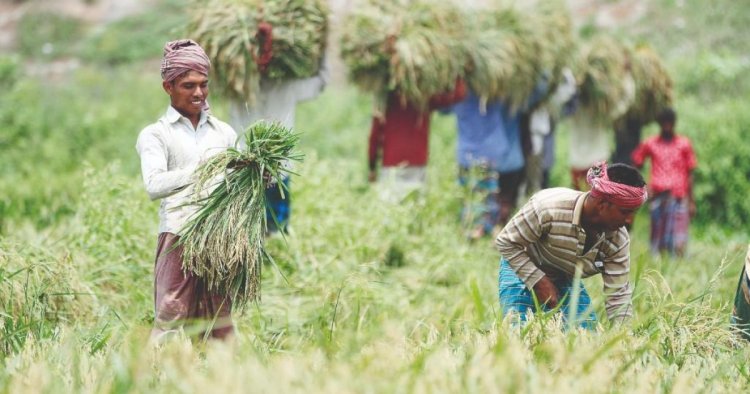
Bangladesh has launched a landmark “Farmers’ Card” programme aimed at transforming agricultural support systems by directly reaching millions of farmers with integrated subsidies, financial services, and digital agriculture support. The initiative, officially introduced on 14 April 2026 in Tangail, marks a significant shift toward a more inclusive, technology-enabled, and climate-resilient rural economy. According to reporting by Reuters, the programme is designed to address long-standing structural barriers faced by smallholder farmers, particularly sharecroppers and marginal landowners who often remain excluded from formal banking and subsidy systems. Under the new system, registered farmers will receive direct access to subsidised fertilisers and seeds, low-interest agricultural loans, crop insurance, mechanisation support, and digital advisory services, significantly reducing dependency on intermediaries and informal markets.
The government has positioned the initiative as a key component of broader agricultural modernisation and rural resilience efforts. In the initial phase, the programme will cover more than 22,000 farmers in selected pilot areas before scaling nationally to reach an estimated 27.5 million farmers over the next five years. Authorities have also emphasized the integration of digital tools, including real-time weather alerts, market price updates, and crop management guidance, aimed at improving productivity and reducing climate-related vulnerabilities. From a development perspective, the Farmers’ Card initiative is particularly significant in the context of Bangladesh’s evolving climate and food security risks. Agriculture still employs a large share of the population and contributes around 11–12% of GDP, making it a critical sector for both economic stability and nutrition security. However, recurrent climate shocks, input price volatility, and fragmented subsidy systems have historically weakened rural resilience and widened inequality among farmers.
The initiative also reflects an emerging shift toward digitized social protection systems in Bangladesh, aligning agricultural policy with broader efforts to strengthen transparency, reduce leakage, and improve targeting efficiency. Development partners view such integrated platforms as essential for building adaptive safety nets that can respond to climate-induced shocks, market instability, and rural poverty dynamics.
For donor agencies and international development actors, the Farmers’ Card programme presents a scalable model for inclusive rural transformation, combining digital governance, climate-smart agriculture, and financial inclusion. If effectively implemented, it has the potential to significantly enhance rural livelihoods while contributing to national food security and climate adaptation goals.
Source: Reuters: https://www.reuters.com/world/asia-pacific/bangladesh-launches-farmers-card-boost-agriculture-support-2026-04-14/