Bangladesh Urban Health Network (BUHN) at ICUH 2025

The Bangladesh Urban Health Network (BUHN) had a prominent and impactful presence at the 21st International Conference on Urban Health (ICUH 2025), held from 17 to 21 November 2025 in Wellington, New Zealand. Organized by the International Society for Urban Health (ISUH), the conference — titled “Healthy Cities, Resilient Futures: Weaving Climate Action, Equity, & Wellbeing from Asia Pacific to the World”— brought together global leaders, researchers, policymakers, and practitioners to advance urban health agendas focused on sustainability, equity, and climate resilience. Throughout the event, BUHN contributed to multiple high-profile sessions, underscoring Bangladesh’s leadership in urban primary healthcare governance, climate-adaptive service delivery, and community-centered innovations. These engagements highlighted national reforms, strengthened multisectoral coordination, and evidence-based strategies shaping the next generation of urban health systems in Bangladesh.
A dedicated session titled “Delivering Sustainable Urban Primary Healthcare Services” was held on 18 November 2025 (6:00–8:00 PM) at 01 Rongomātāne A. The session convened senior government officials, development partners, and global experts to discuss Bangladesh’s progress in building resilient, inclusive, and sustainable urban primary healthcare systems.
In her welcome remarks, Ms. Giselle Sebag, Executive Director of ISUH, emphasized the importance of globally coordinated efforts to reduce urban health inequities. She highlighted ISUH’s role in fostering collaborative research and policy linkages in rapidly urbanizing contexts. Mr. Md. Saidur Rahman, Secretary, Health Services Division, Ministry of Health & Family Welfare, reiterated the Government of Bangladesh’s commitment to expanding and strengthening urban primary healthcare. He underscored ongoing national reforms aimed at improving governance, expanding service coverage, and embedding climate preparedness across urban health facilities.
Several technical presentations followed. Dr. Mohammad Zahirul Islam, Senior Programme Officer and Health Advisor, Embassy of Sweden to Bangladesh, presented “Resilient Cities, Healthy Communities: Case Studies from Bangladesh and the Region.” His presentation focused on climate-adaptive, community-centered health systems and highlighted early warning and localized adaptation approaches that enhance urban resilience. Mr. Khondoker Md. Nazmul Huda Shamim, Joint Secretary, Local Government Division (LGD), spoke on “Sustainability of Urban Primary Healthcare Models: Leadership, Reform, and Accountability,” emphasizing the need for institutional reforms, improved coordination with city authorities, and stronger monitoring mechanisms. Mr. Rui Liu, Senior Health Specialist at the Asian Development Bank (ADB), delivered a talk on “Governing Sustainable Urban Primary Healthcare: Policy, Planning, and Action,” stressing the importance of development financing, urban planning integration, and evidence-informed policymaking — areas where ADB continues to support Bangladesh.
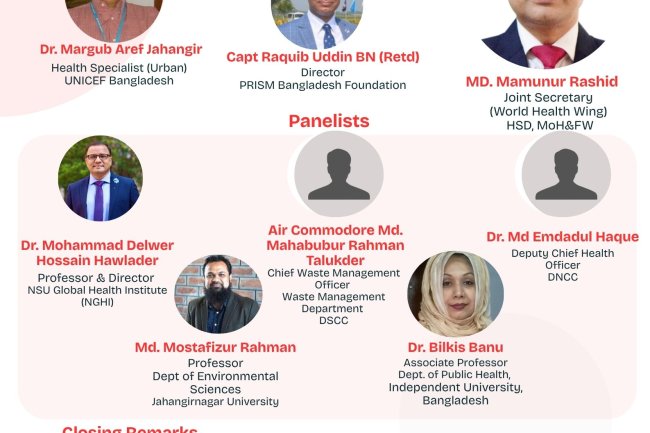
A panel discussion titled “Building Forward Together: Regional Cooperation for Sustainable Urban Health”, moderated by Dr. Md. Shamim Hayder Talukder, CEO of Eminence Associates for Social Development and Member Secretary of BUHN, explored regional collaboration and multisectoral pathways for advancing climate-resilient urban healthcare. He highlighted the growing urgency of integrating climate risk management into primary healthcare delivery. Panelists included Mr. Md. Saidur Rahman, who discussed government-led efforts to decentralize and strengthen urban health systems; Mr. Rui Liu, who offered regional perspectives on sustainable governance; and Dr. Margub Aref Jahangir, Health Specialist (Urban), UNICEF Bangladesh, who shared insights on models such as UNICEF-supported Aalo Clinic and emphasized people-centered urban service delivery. The subsequent interactive Q&A session, moderated by Mr. Shah Imam Ali Reza, Joint Secretary (Planning), Health Services Division, underscored the importance of strategic planning, data-driven decision-making, and long-term investment to build resilient urban health systems.
On 19 November 2025, BUHN also led a pre-formed panel session titled “Climate Resilience and Urban Health: Addressing Heat, Floods, and Air Pollution in South-east Asian Cities” (2:15–3:15 PM, Venue: 04 MATIU). This session examined pressing climate-related health risks affecting urban populations and explored intersectoral, evidence-based solutions applicable across South-east Asia. Dr. Margub Aref Jahangir emphasized UNICEF’s initiatives to strengthen frontline health services against extreme weather impacts, including integration of heat-health action plans and flood preparedness into city health systems. Dr. Md. Shamim Hayder Talukder delivered a presentation on “Governing for Resilience: Intersectoral Policy Approaches to Urban Health and Climate Risk,” highlighting the necessity of coordinated governance across health, environment, planning, and local government sectors. Dr. Mohammad Zahirul Islam showcased community-focused innovations through his presentation on “Community-Led Adaptation and Early Warning in Vulnerable Urban Areas.” Mr. Rui Liu contributed regional policy insights, emphasizing how governance structures, financing systems, and long-term urban planning shape climate-sensitive health outcomes.
BUHN members further enriched the conference through scientific contributions. On 20 November 2025, Dr. Md. Shamim Hayder Talukder, Member Secretary of Bangladesh Urban Health Network (BUHN) delivered an oral presentation titled “Sociodemographic and Maternal Predictors of Perinatal Depression in Urban Bangladesh: A Cross-Sectional Study” (1:00–1:15 PM | 05 MAKARO), which identified key determinants of perinatal mental health and highlighted implications for maternal healthcare in urban settings. Poster presentations on 18 and 19 November covered critical topics including “Assessing the Health Impact of Air Pollution and Policy Effectiveness in Urban Bangladesh: A Mixed-Methods Study” and “Hypertension Prevalence and Treatment Adherence among Urban Slum Population in Bangladesh: A Cross-Sectional Analysis to Inform Inclusive Urban Health Strategies,” emphasizing the need for robust air quality policies and integrated NCD services in urban primary healthcare programs.
BUHN’s comprehensive engagement at ICUH 2025 demonstrated Bangladesh’s growing leadership in global urban health and climate resilience discourse. Through strategic dialogue, evidence-based presentations, and strengthened regional collaboration, BUHN showcased how Bangladesh is shaping an equitable, community-driven, and climate-smart vision for urban primary healthcare across South-east Asia. The network’s active contributions reaffirmed the importance of integrated governance, community empowerment, and sustained investment in building resilient, future-ready urban health systems.