Climate-health budget share falls despite rising climate risks: study
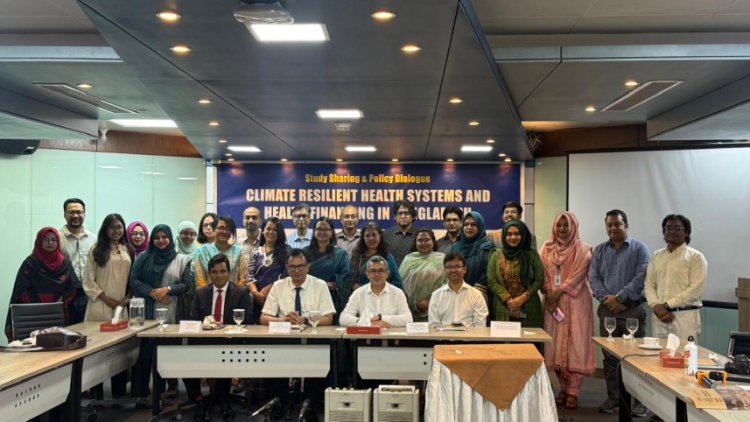
Ahead of the FY2026-27 national budget, policymakers, researchers and public health experts today called for urgent reforms to Bangladesh's climate-health financing system, warning that budget allocations for the sector have declined despite growing climate-related health risks across the country. The call came at a high-level policy dialogue titled, “Climate-Responsive Health Financing and Health System Resilience in Bangladesh”, organised by the Center for Participatory Research and Development (CPRD) in collaboration with HEKS/EPER and Shushilan at Brac Centre Inn in Dhaka.
Findings presented at the event showed that climate-relevant allocations within the Health Services Division fell from 2.74 percent of its total budget in FY2021-22 to 1.97 percent in FY2025-26. Health's share of the national climate budget also declined during the same period, dropping from about 2.5 percent to 1.5 percent, even as Bangladesh faces increasing exposure to climate-induced health threats. According to the study, less than one percent of financing from the Bangladesh Climate Change Trust Fund (BCCTF) has been allocated to health-related projects. Of the 877 projects funded through the trust fund as of 2024, only three were implemented through the Health Services Division. The study also highlighted major structural weaknesses in climate-health financing. While Bangladesh's National Adaptation Plan (NAP) 2023-2050 identifies health as a key adaptation priority and the Health National Adaptation Plan (HNAP) estimates that approximately $1.4 billion will be needed over the next five years to build climate-resilient health systems, current financing remains heavily project-oriented. Over 60 percent of climate-health expenditure is concentrated in development projects, while critical investments in disease surveillance, emergency preparedness, workforce capacity, climate-health research, and long-term health system resilience continue to receive limited attention.
The findings suggested a persistent gap between national climate-health ambitions and the financing mechanisms needed to implement them. The event also featured findings from CPRD's study titled, “Assessing the Impact of Climate Change on the Reproductive Health of Coastal Women and Adolescent Girls”. The study documents serious reproductive and maternal health challenges among women in coastal areas, linked to climate-induced poverty, water scarcity, salinity intrusion, and inadequate sanitation services. Women participating in the study reported a wide range of reproductive health complications, including irregular menstruation, severe menstrual pain, amenorrhea, abnormal bleeding, miscarriage, pre-eclampsia, postpartum infections, hemorrhage, and chronic reproductive health conditions. Discussants noted that these health impacts are no longer isolated public health concerns but represent a growing climate adaptation challenge requiring dedicated financing, stronger institutions, and improved coordination across government agencies. The dialogue brought together senior government officials, public health experts, researchers, development partners, civil society representatives, academics, climate specialists, and media professionals.
The session was addressed, among others, by Md Shamsuddoha, chief executive of CPRD; Shah Abdul Saadi, deputy secretary of Economic Relations Division (ERD); Prof Dr Md Iqbal Kabir, director of Climate Change and Health Promotion Unit (CCHPU); AKM Sohel, additional secretary and UN wing chief at Economic Relations Division (ERD). The dialogue concluded with a set of policy recommendations for the FY2026-27 National Budget, including stronger integration of Health National Adaptation Plan priorities into national budgeting processes, improved climate-budget tracking systems, increased recurrent financing for preparedness and surveillance, and expanded access to domestic climate finance for health-led adaptation initiatives.
Reference: https://www.thedailystar.net/news/environment/news/climate-health-budget-share-falls-despite-rising-climate-risks-study-4192001