Health Sector Reform Emerges as a Central National Priority Ahead of Bangladesh Elections: Experts Call for Strong Primary Healthcare and Financial Protection
With Bangladesh preparing for its national election, health sector experts across medical, policy, and academic circles have underscored the urgent need to prioritize accessible, affordable, and quality healthcare for all citizens, particularly through strengthening primary healthcare systems and reducing catastrophic out-of-pocket expenses. As political parties finalize their manifesto pledges, these recommendations highlight systemic deficiencies in urban and rural health services and propose strategic reforms to embed universal health coverage (UHC) into the country’s development agenda.
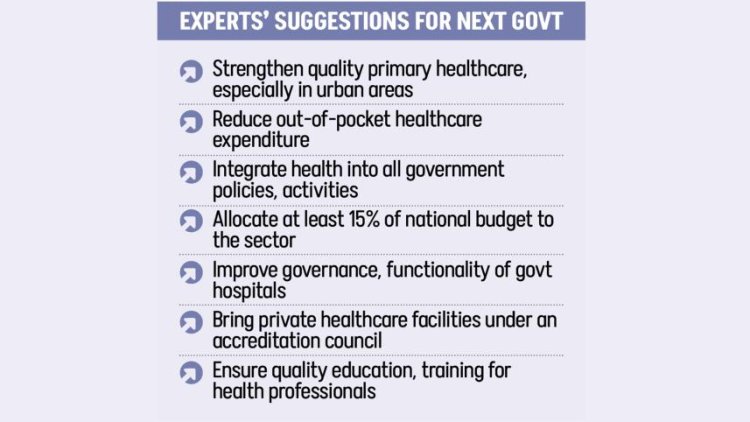
Several experts emphasize that health must be recognized not merely as the responsibility of the Ministry of Health but as a cross-sectoral imperative integrated across government policy and budgetary frameworks. Despite Bangladesh’s notable socio-economic progress, primary healthcare, the frontline of disease prevention, early diagnosis, and community health promotion, remains weakly funded and poorly coordinated, particularly in urban areas where dense populations face multiple barriers to accessing basic services.
Prof. M. A. Faiz, a leading public health specialist and former Director General of the Directorate General of Health Services, noted that primary healthcare has been historically under-prioritized, resulting in elevated healthcare costs and inequitable service access. He argues that a defined population-based service delivery model, led by physician teams and supported by community health workers, could ensure that essential health services reach all segments of the population. Importantly, he emphasized the need to expand Bangladesh’s universal service package geographically and in the scope of services covered, ensuring individuals pay according to their financial capacity rather than facing catastrophic health expenditures. Elevated out-of-pocket costs remain a critical driver of poverty and inequity, undermining health security for many poor and marginalized citizens. Experts also call for a comprehensive restructuring of the health management system to improve coordination, efficiency, and accountability. One proposal gaining traction is to reorganize Bangladesh’s health governance architecture into three distinct directorates: clinical services, academic direction, and public/primary healthcare. This structural reform aims to delineate roles and resources more clearly, strengthen capacity across service delivery levels, and foster accountability mechanisms that are currently fragmented. Another major recommendation is to institutionalize primary healthcare in law by declaring it a constitutional obligation and ensuring these services are provided free at the point of use. This legal framework would reinforce the government’s commitment to health equity and provide a robust platform for donor engagement, program financing, and integrated service planning. Experts suggest phased budget increases, targeting at least 15 percent of the national budget or five percent of gross national income, to support comprehensive health coverage, workforce development, and essential service expansion. Regulating medicine prices and enforcing adherence to the updated National Essential Drug List has also been highlighted as critical measure to curb excessive treatment costs and safeguard consumer access. Such reforms can reduce financial barriers for low-income populations and promote standardization of treatment across public and private facilities.
In urban contexts where disparities in sanitation, environmental health, non-communicable disease burdens, and healthcare workforce shortages are most pronounced, these national reform priorities align closely with calls for decentralized service delivery, stronger municipal health governance, and integrated planning that centers community health needs. As political manifestos are finalized, the expert consensus is clear: primary healthcare must be at the forefront of the next government’s policy and budget agenda. Prioritizing accessible, equitable, and publicly financed healthcare not only advances societal well-being but also supports Bangladesh’s commitments to the SDGs and long-term inclusive development