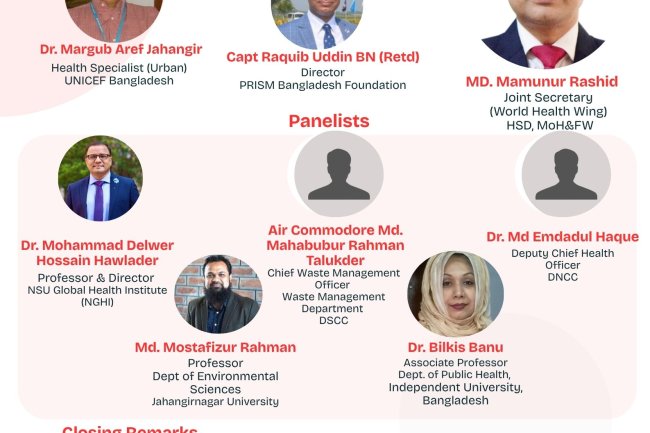
BUHN’s 4th Bi-weekly Knowledge Sharing Virtual Seminar Session on Urban General Practitioner Services and Referral System
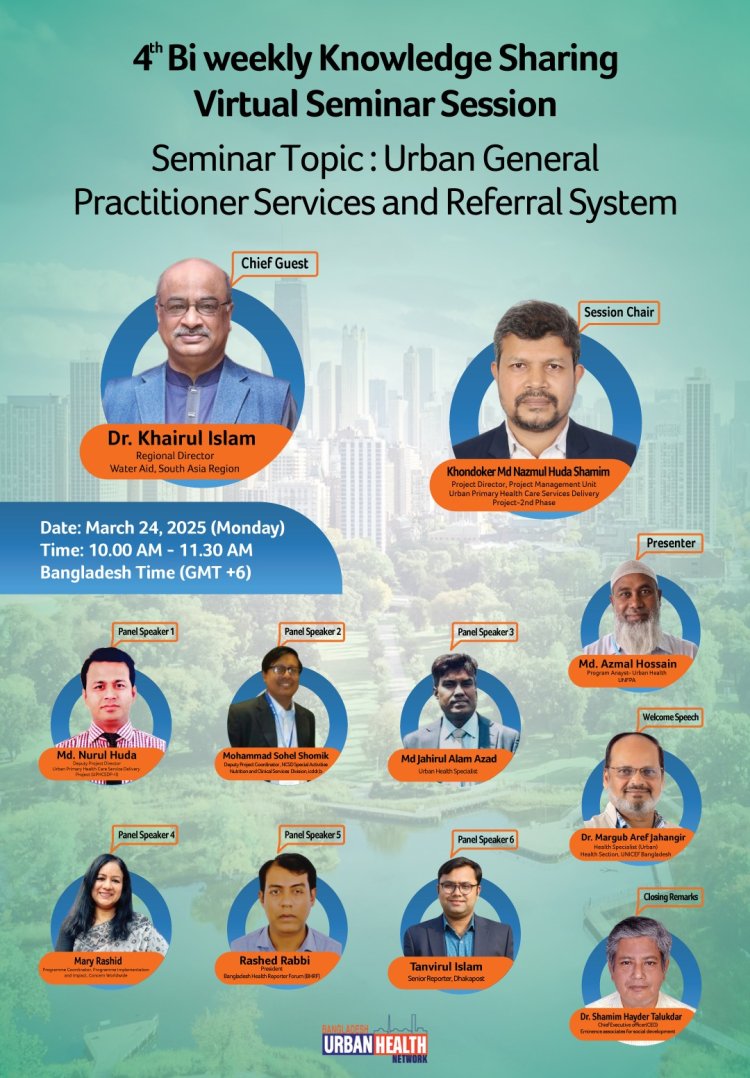
The Bangladesh Urban Health Network (BUHN) successfully hosted its 4th Bi-Weekly Knowledge Sharing Virtual Seminar on "Urban General Practitioner Services and Referral System" on March 24, 2025, from 10:00 AM to 11:30 AM BST (GMT+6) via Zoom. Moderated by Maliha Khan Majlish, Project Associate at Eminence Associates for Social Development, the session convened key stakeholders, including policymakers, health experts, researchers, media representatives, and development partners, to deliberate on the development of a General Practitioner (GP) center system in Bangladesh. The discussions revolved around the structural framework, operational facilities, and referral mechanisms of GP centers, alongside the critical role of media in raising public awareness about the system. The seminar underscored the urgent need for intergovernmental coordination, multi-sectoral collaboration, and public engagement to establish an effective GP-based healthcare model that enhances urban primary healthcare access and efficiency.
Dr. Margub Aref Jahangir, Health Specialist (Urban) at UNICEF Bangladesh, opened the seminar by stressing the GP system's potential to bridge urban healthcare gaps, despite implementation challenges, and called for a coordinated approach to integrate it into Bangladesh's healthcare framework. A key highlight of the seminar was Md. Azmal Hossain's, (a program analyst-urban health at UNFPA) presentation on “Ma Jaan: solving referral challenges for urban poor to access emergency obstetric and newborn care in Bangladesh” an adaptable Android application designed to address referral challenges for urban poor in accessing emergency obstetric and newborn care in Bangladesh by connecting midwives with drivers and referral sites for timely healthcare, while emphasizing affordability, accessibility, and the need for interoperability and continuous monitoring in digital health integration.
The panel discussion featured insights from several distinguished experts. Urban Health Specialist Md. Zahirul Alam Azad highlighted the excessive dependence on pharmacies for primary care in cities, emphasizing the need for strict regulations to establish an effective GP system, along with policy reforms, AI integration, and clear guidelines on whether GP services should be restricted to public hospitals or include private facilities. Mary Rashid, Deputy Director at Concern Worldwide, stressed the need for a sustainable, collaborative approach between the MoLGRD&C and MoHFW, along with strong leadership to define healthcare tiers and implement a phased referral system to prevent systemic overload. Ima Akter, a researcher at icddr,b, identified gaps in urban healthcare, advocated for the GP system as a solution to enhance primary healthcare access, and pledged icddr,b's support for its advancement. Media representatives also contributed valuable insights. Rashed Rabbi, President of the Bangladesh Health Reporters Forum, urged further research and policy dialogue to assess the necessity of GP centers, cautioning against hasty investments without evidence-based planning. Tanvirul Islam, Senior Reporter at Dhaka Post, pointed out that 60% of urban residents rely on private healthcare due to inefficiencies in government services, while 65% remain unaware of GP services, underscoring the need for public-private partnerships and media advocacy to drive healthcare reforms.
During the open discussion, Dr. Md. Abdur Razzaqul Alom, National Consultant at UNICEF Bangladesh, underscored the importance of preventing tertiary hospital overuse by strengthening referral systems and proposed a comprehensive, tech-enabled model from the outset. Masuda Begum, Director of Health and Nutrition at Nari Maitree, called for the integration of AI into the GP model and the development of comprehensive clinics. Chandrasegarar Soloman, Health Manager at UNICEF Bangladesh, applauded Bangladesh’s digital advancements and BUHN’s efforts to convene a diverse group of experts to address pressing health system reforms. Dr. Sabera Sultana, National Professional Officer of World Health Organization (WHO) highlighted the need for continued multi-stakeholder consultations and strong government commitment to determine the responsible authority for leading urban health initiatives.
Dr. Khairul Islam, Regional Director, WaterAid, South Asia and President of the Bangladesh Urban Health Network (BUHN), served as the Chief Guest, highlighted the importance of the GP-based health model in the upcoming Health Reform Commission's report, emphasizing the need for collaborative efforts to implement the referral system despite challenges, though its sustainability before the next government remains uncertain. The Session Chair, Khondoker Md Nazmul Huda Shamim, Project Director of the Urban Primary Health Care Services Delivery Project-Phase 2, highlighted the ease of accessing doctors in Bangladesh, which strains the healthcare system and stressed the importance of digital health records and report acceptance, and urged an integrated approach to strengthen healthcare services.
In the closing remarks, Dr. Md. Shamim Haider Talukder, CEO of Eminence Associates for Social Development and BUHN Member Secretary, emphasized the importance of GP and referral systems in addressing non-communicable diseases (NCDs), especially those aggravated by rapid urbanization and called for greater leadership from local governments on issues like climate change and environmental health to ensure equitable access to healthcare.
The seminar concluded with key decisions emphasizing stronger coordination among government bodies, NGOs, the private sector, and media for implementing a sustainable GP and referral system; expanding digital tools like Ma Jaan with AI and interoperable health records; clarifying regulations on pharmacy dependence and GP service coverage; launching nationwide awareness campaigns; prioritizing affordability, accessibility, and responses to NCDs and climate-related health threats; and ensuring continuous evaluation, public-private collaboration, and long-term sustainability beyond donor funding. The seminar served as a valuable platform for multi-sectoral dialogue and consensus-building around the General Practitioner system in urban Bangladesh. By fostering collaboration among diverse stakeholders, the event successfully highlighted actionable strategies and policy priorities necessary to strengthen urban primary healthcare. Continued engagement, technological innovation, and coordinated leadership will be crucial to realize the vision of an inclusive, efficient, and resilient urban healthcare system.