Key Stakeholder Message: HM Taseen Jubair Bhuiyan
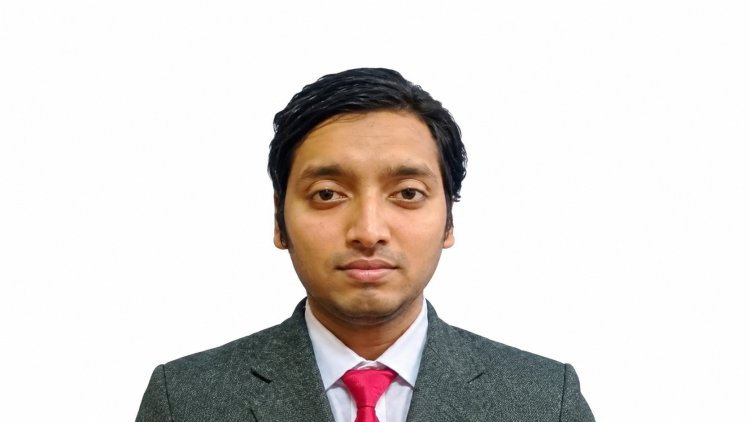
HM Taseen Jubair Bhuiyan
Masters in Applied Statistics and Data Science
Jahangirnagar University
Dengue returns to Bangladesh every monsoon, and this year is already one of the worst: by mid-October, more than 99,000 people have been admitted to hospital and 303 have died, with Dhaka Division carrying two in five of them. That already clears last year's full-season tally, and the season is still climbing - September was the peak, with 43,774 admissions, and October has added another 19,655. The record remains 2023, when 320,000 were admitted and 1,705 died. Covid-19 taught us the same lesson in a different way. It is a forecasting habit, built from data we already collect: daily admissions at hospitals and clinics, test positivity rates, temperature, rainfall and humidity, satellite images showing where water sits in drains, discarded tyres and rooftop tanks, and mobile phone movement between areas. Trained on several seasons of that record, a model can spot the mix that usually comes before cases start climbing in a particular ward, and it can do that a week or two before the numbers reach the daily bulletin. Two weeks of heavy rain followed by a jump in fever cases in the same corner of a city is a pattern a person can learn to read. A model simply reads it in several hundred wards at once, without getting tired.
What comes back is a map, refreshed each week, naming the wards and upazilas where the risk is going up. A city corporation can use it to decide where the fogging teams go first, which drains get cleared, which hospitals are asked to keep beds free. The map doesn't need a data scientist to read it. A ward health assistant can open it on a phone, see his own area going from green to yellow, and plan the week around that. The same idea applies to Covid-19, with admission trends, laboratory results and movement data standing in for mosquito breeding sites. During Covid the country built a national dashboard and a daily reporting routine that most districts now follow. Dengue has never had the same discipline, and the gap between a fever case in a ward and a line in the national tally is still measured in days.
The limits are worth saying out loud. A forecast is only as good as the reporting behind it, and gaps in private hospital data or slow entry from rural facilities will bend the result. A model can be wrong in a year that behaves oddly. It can't replace the epidemiologist checking a cluster, or the field worker who walks a street and counts larvae in a water drum. Bangladesh doesn't need an expensive black box built somewhere else. The tool should be open, cost little to run on the servers we already have, and explain itself in Bangla so a district officer can see why it picked his area. Movement data would have to be used in aggregate, so that no single person is tracked. Put in place before the next monsoon, it would give the country something it has never quite had in a dengue season. A little warning instead of none.